



Welcome to our treasure trove of antique rugs, where history meets elegance, and every thread tells a story of timeless beauty. Discover exquisite handcrafted masterpieces, meticulously woven by skilled artisans from around the globe, each rug bearing the hallmark of tradition and craftsmanship.
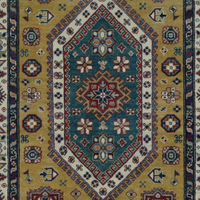
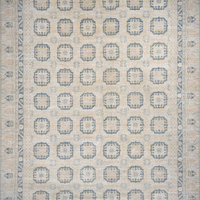
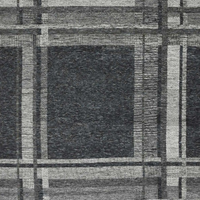
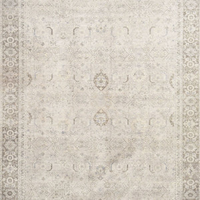
561 products


Hand-Knotted 10 Foot Round Rugs — Persian & Oriental Round Area Rugs
A 10 foot round rug is a statement piece. At this scale, a round rug doesn't just decorate — it defines a room, anchoring a dining table for six to eight, softening the geometry of a square living room, or turning a grand foyer into the focal point of a home. This collection brings together authentic hand-knotted round Persian and Oriental rugs in the 10 ft size, each one individually woven by master artisans and offered at workshop-direct pricing with free shipping in the continental US.
Every round rug below is one of a kind. These are not machine-made or tufted imitations — they are genuinely hand-knotted in the weaving traditions of Iran, Turkey, Afghanistan, and India, built from resilient hand-spun wool and, in select pieces, silk. Whether you're sizing a rug to a 60-inch round dining table, creating a reading nook, or investing in a large-format heirloom, the guide below walks through the sizing, materials, and regional styles that matter most.
Why a 10 Foot Round Rug?
A 10 foot round area rug is the largest standard round size before custom-order territory. Used correctly, it unifies a room with a continuous curved line instead of the hard angles that rectangular rugs impose. Three scenarios account for most 10 ft round rug purchases:
Under a 60-inch (5 ft) round dining table for six — leaves the recommended 30 inches of chair clearance on all sides, the industry-standard clearance rule from designers.
Under a 72-inch (6 ft) round dining table for eight — provides 24 inches of clearance, at the minimum end of the sizing rule. For anything larger than a 6-ft table, a 12-ft round is a better fit.
As a statement anchor in a large open-plan living room, foyer, or reading room — typically in a 15' × 15' or larger open square-ish space, where a round rug softens the architecture and creates an intentional centerpiece.
How to Size a 10 Foot Round Rug for a Dining Room
The standard sizing rule used by interior designers: leave 24 to 30 inches of rug extending beyond the edge of the dining table on all sides. This ensures chair legs stay on the rug when chairs are pulled out — the single biggest functional mistake in dining room rug selection.
Measure your dining table's diameter (edge to edge across the center).
Add 48 to 60 inches total — that's 24 to 30 inches of clearance on each side.
Compare against your room. Leave at least 18–24 inches between the rug edge and the walls for visual balance.
A 10 ft round rug (120 inches in diameter) gives you 30 inches of clearance on a 60-inch table or 24 inches on a 72-inch table. If your dining table is 48 inches or smaller, an 8 ft round is usually the right size; 12 ft round rugs or custom sizes work for 78+ inch tables.
How to Size a 10 Foot Round Rug for a Living Room
The dining-room rule doesn't apply here. In a living room, a 10 ft round rug is used to define a conversation area — the space where the sofa, armchairs, and coffee table sit. The rule of thumb:
All front furniture legs on the rug, or all four legs if the room is large enough. For a 10 ft round, this typically means the front legs of a three-seat sofa plus one or two flanking chairs.
Leave at least 12–18 inches of exposed floor between the rug edge and walls or large furniture pieces.
Center the rug on your seating arrangement, not the room. A round rug pulled slightly off-center toward the seating reads as intentional; a round rug centered on the room but offset from seating reads as accidental.
Wool, Silk, or a Blend?
Round format doesn't change the material rules, but the use case often does. Because round rugs frequently go under dining tables — a high-traffic, high-spill zone — wool is almost always the right answer for round rugs in active homes.
100% wool — the workhorse. Naturally stain-resistant from lanolin, resilient to crushing from chair legs, flame-retardant. Best for dining rooms, family living rooms, and anywhere with pets or children.
Wool with silk highlights — silk accents catch light and add depth to floral medallions, which are common in round Persian designs. Durability stays near pure-wool levels.
Pure silk (Qom/Qum rounds) — extraordinary visual impact, best in low-traffic formal foyers, galleries, or bedrooms. Silk shows wear faster than wool and is not recommended under a dining chair.
Regional Styles Available as 10 Ft Round Rugs
Not all Persian and Oriental weaving traditions commonly produce large round rugs — the round format requires a specific loom setup and is more common in some regions than others. These are the traditions where 10 ft round rugs are an established craft:
Tabriz rounds — the most widely produced Persian round. Fine knot density, elegant floral medallion designs, typically ivory or blue grounds with red accents. Excellent choice for a formal dining room.
Kashan rounds — classic curvilinear floral medallion format, refined urban design, often with silk-accented wool. Best for traditional interiors.
Qom / Qum round silk rugs — the top of the luxury tier. 100% silk, extraordinarily fine knot counts, suited to low-traffic statement placement.
Nain rounds — distinctive ivory-and-blue palette with delicate floral patterns, understated elegance.
Kerman rounds — softer pastel palette (rose, cream, pale green), floral-medallion format. Works in both traditional and transitional rooms.
Overdyed and vintage rounds — washed, refinished antique wool pieces in saturated single-tone palettes (deep blue, rust, charcoal) for modern and contemporary interiors.
Every round rug in this collection is tagged with its origin tradition, so you can filter by what suits your home.
What's the Difference Between a Round Oriental Rug and a Round Persian Rug?
All Persian rugs are Oriental rugs; not all Oriental rugs are Persian. "Persian" specifically refers to rugs woven in Iran (historically Persia), from the Tabriz, Kashan, Qom, Nain, Kerman, Isfahan, and other named regional traditions. "Oriental" is the broader umbrella — it includes Persian rugs but also Turkish (Oushak, Hereke), Caucasian (Kazak, Shirvan), Afghan, Pakistani, Indian, and Chinese hand-knotted rugs. A 10 ft round Oriental rug could be Persian or from any of these other traditions; a 10 ft round Persian rug is specifically from Iran. Both are hand-knotted; the terms describe origin, not quality.
Care and Longevity
A properly cared-for hand-knotted 10 ft round rug appreciates with age rather than wearing out. Three practical rules, with one nuance specific to round format:
Rotate 90 degrees annually. Round rugs have no "end to flip" — instead, mark the original north-facing point with a small thread on the back and rotate a quarter-turn each year to even out sun-fading and traffic wear.
Use a non-slip round rug pad cut 1–2 inches smaller in diameter than the rug. Round pads are harder to source than rectangular; our customer service can help you order one cut to size.
Professional cleaning every 3–5 years. Hand-knotted wool and silk rugs are washed, not dry-cleaned. Vacuum weekly using suction only (no beater bar on silk) and leave deep cleaning to a specialist. Call us.
Q: What size dining table fits under a 10 foot round rug?
A: A 10 foot round rug fits a 60-inch (5 ft) round dining table for six with 30 inches of chair clearance on all sides, or a 72-inch (6 ft) round dining table for eight with 24 inches of clearance. For dining tables smaller than 48 inches, an 8 ft round is usually the better fit; for tables larger than 72 inches, consider a 12 ft round or a custom size.
Q: What's the difference between a round oriental rug and a round Persian rug?
A: All Persian rugs are Oriental rugs, but not all Oriental rugs are Persian. "Persian" specifically means woven in Iran — Tabriz, Kashan, Qom, Nain, and similar traditions. "Oriental" is the broader term covering Persian plus Turkish, Caucasian, Afghan, Indian, and other hand-knotted traditions. Both are hand-knotted; the terms describe origin, not quality.
Q: How much does a hand-knotted 10 foot round rug cost?
A: Authentic hand-knotted 10 ft round rugs typically range from around $2,500 for a simpler wool Tabriz or overdyed vintage piece up to $15,000 or more for a fine Qom silk or high-knot-count Kashan. Pricing varies with knot density (knots per square inch), material (wool vs. wool-and-silk vs. pure silk), age, and regional provenance. Machine-made round rugs from big-box retailers cost less but typically last only a few years in high-traffic areas — a hand-knotted wool round is usually the better long-term value.
Q: Can I use a 10 ft round rug in a living room?
A: Yes, and it's an underused design choice. A 10 ft round rug works best in a square or near-square living room of roughly 15 ft × 15 ft or larger, used to anchor the seating arrangement. Place the rug so the front legs of the sofa and flanking chairs rest on it. A round rug in a rectangular living room can work, but alignment becomes trickier — rectangular or oval sizes usually fit rectangular rooms more naturally.
Q: Do you offer custom sizes for round rugs?
A: Yes. We regularly source custom-diameter round rugs from our partner workshops in sizes between 7 and 14 feet. Custom lead time is typically 10–18 weeks depending on the design and knot density. Contact our team with your target diameter and preferred style to discuss options and pricing.
Q: How do I keep a round rug from slipping?
A: Use a round non-slip rug pad cut 1–2 inches smaller in diameter than the rug. On hardwood or tile, a felt-and-rubber pad works best; on carpet, use a carpet-to-carpet pad designed for the job. A properly fitted pad also protects the rug's foundation and extends its life.