



Welcome to our curated collection of Mamluk rugs, where timeless elegance meets unparalleled craftsmanship. Indulge in the rich history and cultural significance of these majestic pieces, meticulously handcrafted to adorn your living spaces with opulence and charm.
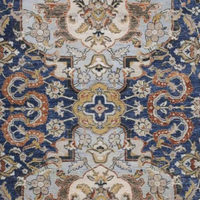
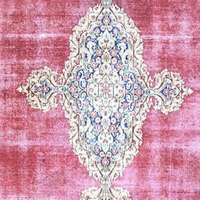
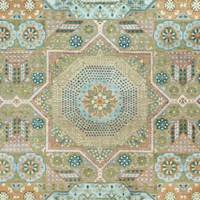
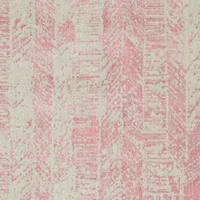
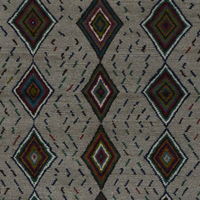
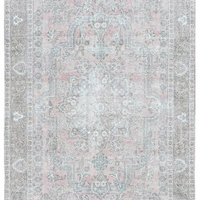
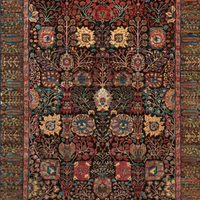
163 products


Mamluk Rugs — Ancient Geometry, Timeless Grandeur
Mamluk rugs are among the most historically significant and visually distinctive rugs ever woven. Originating in Cairo under the Mamluk Sultanate of Egypt (13th–16th century), these extraordinary pieces represent one of the earliest and most refined traditions of pile rug-making in the Islamic world. Today, the Mamluk style is revived and reinterpreted by master weavers working in Pakistan and Afghanistan, using the same bold geometric vocabulary and jewel-toned palettes of the originals — hand-knotted to the highest standards of contemporary craftsmanship. At Merchants Of Asia, our Mamluk collection brings this rare and regal tradition into homes that appreciate rugs as both art and history.
The Distinctive Mamluk Design Language
Mamluk rugs are instantly recognizable by their extraordinary geometric complexity and singular aesthetic logic:
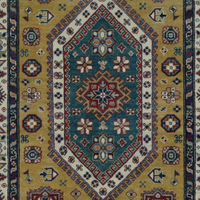
- Kaleidoscopic radial geometry — large central octagons or star medallions radiating outward in perfectly symmetrical, interlocking geometric fields — a design achievement of remarkable mathematical precision
- Jewel-toned color palette — rich emerald greens, deep crimson reds, warm golden yellows, and cool blues — colors drawn from the luminous tilework and manuscript traditions of medieval Cairo
- S-spun wool construction — traditional Mamluk rugs used an unusual S-spun (counterclockwise) wool that produced a uniquely lustrous, silky pile; contemporary Mamluk revivals honor this with premium hand-spun wools
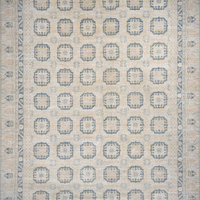
- All-over geometric field — unlike Persian rugs with a central medallion and open field, Mamluk designs fill the entire surface with interlocking geometric forms — every inch of the rug is active and intentional
- Papyrus, lotus, and palm motifs — naturalistic Egyptian botanical elements woven into the geometric framework, a reminder of the rug’s North African origin
Historical Significance
The original Mamluk rugs — produced in Cairo between the late 15th and early 16th centuries — were among the most prized luxury objects in the medieval Islamic world, gifted to European courts and acquired by Venetian merchants who encountered them along trade routes. Many originals survive today in the world’s great museums — the Metropolitan Museum of Art, the Vienna Museum of Applied Arts, and the Museo Nazionale del Bargello in Florence among them. Owning a Mamluk-style rug is owning a piece of that extraordinary legacy.
Interior Style Pairings
Mamluk rugs are statement pieces by nature. Their bold geometric fields and rich color palettes command attention — they work best as the anchor of a room rather than a background element. Place a Mamluk rug in a formal dining room, a double-height entrance hall, a panelled library, or a living room designed around a single, powerful focal point. They pair beautifully with dark wood furniture, brass and bronze accents, velvet upholstery, and architectural interiors with strong geometric or classical detailing.
Care & Preservation
Hand-knotted Mamluk rugs in premium wool are built for longevity. Vacuum gently without a beater bar, rotate every 6–12 months for even wear, use a quality rug pad, and have professionally cleaned by a natural fiber specialist every 3–5 years. Keep out of prolonged direct sunlight to preserve the depth of the jewel-toned palette.
Frequently Asked Questions — Mamluk Rugs
What is a Mamluk rug?
A Mamluk rug is a style of hand-knotted oriental rug originating in Cairo, Egypt, during the Mamluk Sultanate (13th–16th century). They are distinguished by their bold radial geometry, all-over geometric field compositions, jewel-toned color palettes, and the use of S-spun wool. Today, Mamluk-style rugs are hand-knotted by artisans in Pakistan and Afghanistan following the same design traditions.
Are Mamluk rugs rare?
Authentic antique Mamluk rugs from the original Cairo period are extremely rare and found primarily in museum collections. Contemporary Mamluk-style rugs — such as those in our collection — are hand-knotted revivals that faithfully reproduce the geometry and palette of the originals, making this historic design tradition accessible to collectors and design enthusiasts today.
What makes Mamluk rugs different from Persian rugs?
While Persian rugs typically feature a central medallion floating on an open field with curvilinear floral motifs, Mamluk rugs fill the entire surface with interlocking geometric forms radiating from a central star or octagon. The color palettes also differ — Mamluk rugs favor emerald, crimson, and gold over the broader palette range of Persian weaving. Construction-wise, traditional Mamluks used S-spun (counterclockwise) wool, which is unusual in the rug world.
Where are Mamluk rugs made today?
The finest contemporary Mamluk-style rugs are hand-knotted in Pakistan (particularly in Lahore and Peshawar) and Afghanistan, where highly skilled weavers work within longstanding traditions of reproducing historical rug designs with premium natural wool and vegetable or chrome dyes.
How do I use a Mamluk rug in my home?
Mamluk rugs work best as the dominant design statement in a room rather than a supporting element. Use them in formal living rooms, dining rooms, entrance halls, or libraries where their bold geometric field and rich color palette can be fully appreciated. Pair with dark wood furniture, brass or bronze accents, and architectural interiors for maximum impact.
How should I care for a Mamluk rug?
Vacuum regularly without a beater bar, rotate every 6–12 months for even wear, and use a quality rug pad. Avoid prolonged direct sunlight to protect the jewel-toned palette. Have professionally cleaned by a natural fiber rug specialist every 3–5 years.
Explore the collection and bring one of history’s most extraordinary rug traditions into your home.